UV-Resistant Waterproof Camping Tarp Canopy Guide
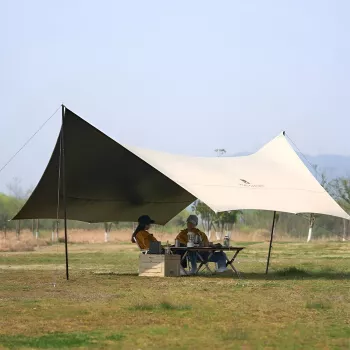
Waterproof UV-Resistant Camping Tarp Canopy for Outdoor Adventures
A good tarp canopy is the piece that keeps a trip comfortable when the forecast changes—shade at midday, a dry cooking spot during a quick squall, and a flexible shelter layout when the campsite doesn’t have the “perfect” tree spacing. Our waterproof, UV-resistant camping tarp canopy is built to serve as a reliable overhead cover for real outdoor use: adaptable setup options, fast transitions between sun and rain protection, and coverage that works for camp kitchens, hammocks, tents, and gear staging. For more guidance, see Best Ultralight Tarp Tents for Every Outdoor Adventure.
What this tarp canopy helps you do at camp
When you bring a canopy that pitches multiple ways, you’re not locked into a single “best case” campsite. You can adapt to wind, uneven ground, and limited anchor points without sacrificing comfort. For further reading, see UV-Proof Waterproof Canvas Tarp, Fits Campers & Trailers ….
- Create dependable shade when the sun is intense, especially on open sites, beaches, desert flats, and lakeshores.
- Add a rain-ready roof over high-traffic areas (camp kitchen, picnic table, entry to a tent) to keep daily tasks comfortable.
- Build flexible shelter shapes—flat roof, A-frame, lean-to, or wing—based on wind direction and tie-out points available.
- Protect gear that should stay dry (packs, shoes, firewood, power banks) without crowding your tent.
- Extend living space: keep doors and vestibules drier so condensation and muddy foot traffic stay down.
Common tarp canopy setups and when to use them
| Setup style | Best for | Quick tips |
|---|---|---|
| Flat / overhead roof | Maximum shade, calm to light wind | Pitch with a slight angle so water runs off instead of pooling. |
| A-frame | Steadier rain protection, two-sided coverage | Center ridge line higher than edges; stake corners evenly for tension. |
| Lean-to | Wind-blocking + one open side for views | Face the closed side into wind; keep the open side low if gusty. |
| Diamond pitch | Fast coverage with fewer anchor points | Use one high point and pull opposite corners tight for drainage. |
| Wing / porch overhang | Extra space outside tent or hammock | Angle outward to shed water away from your sleeping area. |
Weather protection that’s practical: waterproof + UV resistance
Waterproofing is only half the story—pitch quality is what turns “waterproof fabric” into “dry campsite.” If you plan your slope and tension from the start, your canopy sheds water instead of collecting it.
- Waterproof coverage is most useful when the canopy is pitched with steady tension and a defined runoff direction—plan the slope first, then stake.
- UV resistance matters for long afternoons: it reduces heat and glare under the canopy and helps the fabric handle repeated sun exposure over time.
- For rain: avoid low spots that collect water; if you must pitch flat, add a center lift point (pole or line) to prevent pooling.
- For wind: lower the windward edge and keep lines angled (not straight down) for better holding power.
- For mixed conditions: pitch one side lower as a wind/rain wall and keep the leeward side higher for airflow.
Clouds don’t automatically mean you can ignore UV. NOAA’s UV guidance is a helpful habit when you’re planning day hikes or long lake days, even when the sky looks “soft.” See the NOAA/NWS UV Index for a quick, standardized reference. For additional context on exposure under cloud cover, the Skin Cancer Foundation’s overview is a solid resource.
How to size and place a canopy for real campsites
The best canopy placement is the one that supports how you actually move around camp. Our team recommends thinking of your canopy as a roof for your routine—not just a roof for your tent.
- Plan the footprint: cover the area people actually use (table + chairs, stove zone, entry path) rather than only the tent.
- Account for runoff: place the low edge so water drains away from walkways and doesn’t funnel toward your sleeping area.
- Use natural anchors safely: choose sturdy trees and avoid dead branches overhead; keep lines visible to prevent trips.
- On sand or loose soil: use longer stakes, bury anchors, or tie off to heavy objects (rocks, logs) to keep tension.
- Leave space for airflow: a canopy pitched too low can trap heat; a small gap on the leeward side improves comfort.
If you’re using natural anchors, it also helps to follow low-impact habits—especially when you’re tying off lines, moving rocks, or choosing where to stake. The Leave No Trace principles are a practical baseline for keeping sites in good shape for the next group.
Setups that pair well with tents, hammocks, and camp kitchens
Pitching checklist: quick habits that prevent the most common tarp problems
Care and storage for longer tarp life
In-stock picks from our team
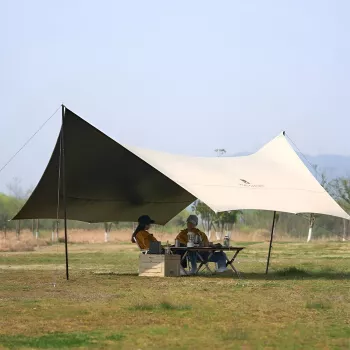
- Waterproof UV-Resistant Camping Tarp Canopy for Outdoor Adventures
- LED Flashlight Smart Watch with Bluetooth Calling & 100+ Sports Modes
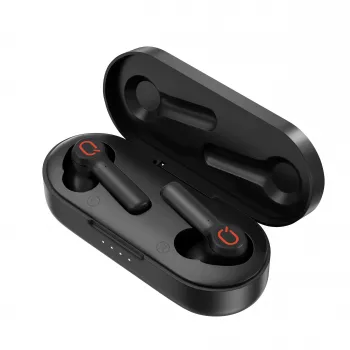
- Wireless Earbuds TWS Bluetooth 5.3 – Low Latency, HiFi Sound, Waterproof
FAQ
How should a tarp canopy be pitched to stop water from pooling?
Pitch your canopy with a clear slope and firm, even tension at the corners so water has a direction to run off. If you need a flatter roof for shade, add a center lift point with a pole or line to create a “peak,” then re-tension after the fabric settles.
Is UV-resistant tarp coverage still needed on cloudy days?
Yes—UV can still reach you through cloud cover, so UV-resistant coverage helps with comfort, glare, and long hours outside. It’s still smart to pair overhead cover with sunscreen and appropriate clothing.
What’s the quickest canopy setup for sudden wind and rain?
A low-profile A-frame or lean-to is usually fastest and most stable. Keep the windward edge low, angle your guylines for holding power, and aim runoff away from where you’ll be standing, cooking, or resting.












Leave a comment