70-Inch TV Stand with LED Lights & 36-Inch Fireplace
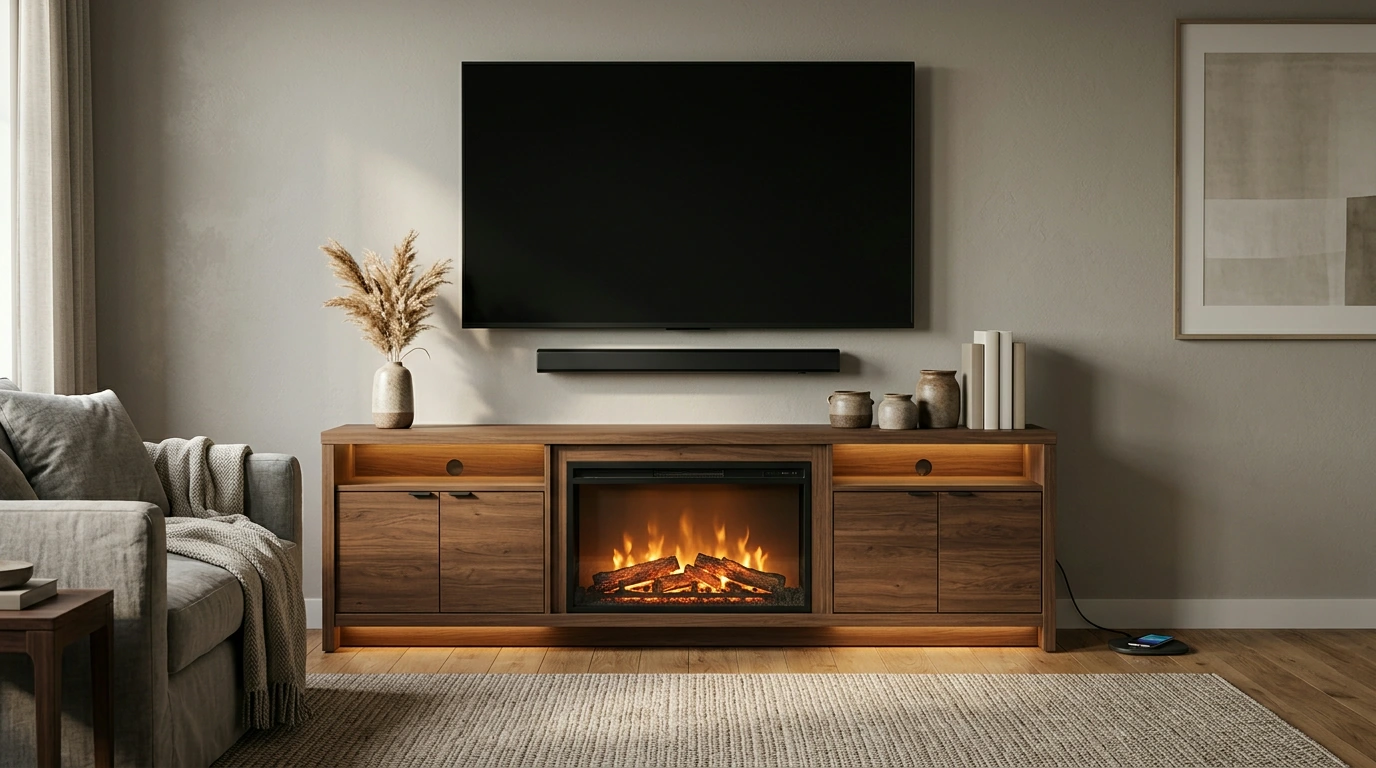
70″ TV Stand with LED Lights + 36″ Electric Fireplace: Storage, Power, and Ambience in One Console
A living room works best when the TV area feels intentional—not like a tangle of cords and scattered devices. This 70″ TV stand pairs a built-in 36″ electric fireplace with LED accent lighting, closed storage, and the everyday convenience of USB and AC power. The result is a single centerpiece that keeps streaming gear organized, adds warmth-like ambience, and makes the whole setup easier to live with. For more guidance, see Electric Fireplace TV Stand for TVs Up to 65″, 58 ….
A clean entertainment setup that still feels cozy
Your TV zone can look streamlined without feeling cold or overly “techy.” A 70-inch top surface gives you a wide, stable base for a big-screen setup, with room to keep the layout soundbar-friendly and balanced. The built-in 36-inch electric fireplace insert creates a natural focal point—no wood stacking, no ash cleanup, and no gas-line complexity. For further reading, see dlbhome.org: Home|Heating, Cooling & Air Quality|Fireplace ….
To finish the look, LED lighting gives you both mood and function: subtle backlighting for low-glare evening viewing or a brighter accent when you’re hosting. With a console-style footprint, everything stays visually centered—TV, media devices, décor, and the fireplace effect—so your room reads as designed, not improvised.
Storage that hides the clutter (and keeps essentials within reach)
Daily living adds “stuff” fast: controllers, remotes, game cases, board games, spare cables, and the inevitable pile of accessories that never seems to have a home. Closed storage cabinet space helps you get that clutter off the surface and out of sight, which instantly reduces visual noise and makes the room feel calmer—even if your household uses the TV area constantly.
For a practical approach, split storage by purpose. Use one side for media gear (console, accessories, game library) and the other for living-room overflow like blankets, candles, or books. For the neatest day-to-day routine, group items by task: streaming + gaming together, charging + batteries together, and a separate spot for manuals and spare cables. That way, you’re not digging through everything just to find one remote.
Built-in USB + AC power: fewer adapters, less cord chaos
Power is where most entertainment centers break down: too many devices, not enough outlets, and cords snaking across the floor. With USB and AC outlets built into the stand, you can power common living-room devices without reaching behind the TV or relying on a messy power-strip “sprawl” in front of the wall.
This setup is ideal for charging phones during movie night, topping up controllers, powering a streaming stick, or plugging in a small accessory that supports your soundbar or media setup. To keep the front view clean, use shorter cables for devices that stay on the stand, and route longer cables only where they’re truly needed. A simple rule our team uses: if a cable doesn’t need to be seen, it shouldn’t be.
LED lights + fireplace effect: set the mood for every season
Lighting and warmth cues are what turn a TV wall into a space you actually want to spend time in. LED accent lighting adds a modern touch and can soften the harsh glow of the TV in a dark room, which helps the whole setup feel more comfortable for late-night viewing.
For general heating safety habits around heaters and heat sources, it’s worth reviewing guidance from the NFPA’s home heating safety resources. And when you’re shopping for electrical products, understanding the basics of the UL Mark can help you recognize common safety certification concepts.
Room-fit checklist: quick guide before placing your order
Placement and setup checklist for a 70″ TV stand with fireplace and power
| What to check | Target | Why it matters |
|---|---|---|
| Wall width | Stand width + a little breathing room | Creates a centered, intentional look and avoids a cramped corner fit |
| TV size and base style | Compatible with a 70″ surface | Ensures stable support and room for décor or a soundbar |
| Power plan | Short cables + nearby wall outlet | Reduces visible cords and keeps USB/AC access convenient |
| Device storage | Dedicated spots per device type | Keeps vents clear and makes daily use simpler |
| Heat and airflow | Keep vents unblocked | Helps electronics and the fireplace insert perform as intended |
Make it the living-room hub: simple styling and organization ideas
In-stock picks from our store
- 70″ TV Stand with LED Lights, 36″ Electric Fireplace, Storage Cabinet & USB AC — a single-console solution for storage, power access, and year-round ambience.
- Wireless Earbuds TWS Bluetooth 5.3 – Low Latency, HiFi Sound, Waterproof — convenient for quiet listening when someone else doesn’t want the soundbar on.
- LED Flashlight Smart Watch with Bluetooth Calling & 100+ Sports Modes — a handy everyday device if you like quick call handling without hunting for your phone.
FAQ
Will this 70″ TV stand fit a large TV?
Yes—its 70-inch width is designed to support large-screen setups. Measure your TV’s base footprint (or leg-to-leg distance) and leave a little side clearance so the setup looks balanced and stays stable.
What can be plugged into the USB and AC ports?
You can use them for common living-room needs like charging phones, powering streaming devices, topping up controllers, or plugging in small accessories. Keep cables organized and avoid overloading the outlets with high-draw devices.
How do you keep cords hidden with a fireplace TV stand?
Group devices by cabinet area, use shorter cables for anything that stays on the stand, and route excess length behind or inside the storage sections. Label key cables for faster swaps and keep airflow paths clear around electronics and the fireplace insert.










Leave a comment