Cordless 12V Tire Inflator: Digital Display & Auto Stop
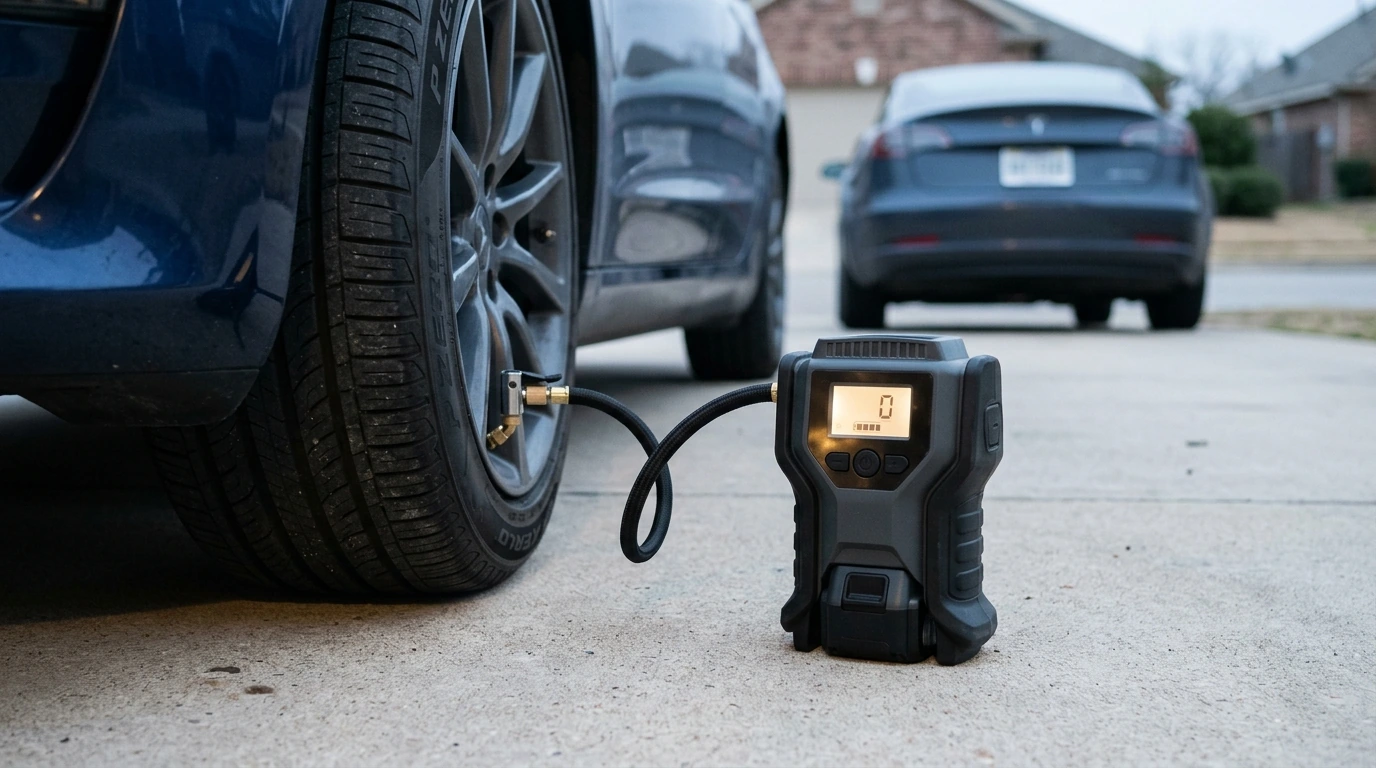
12V Electric Portable Tire Inflator with Digital Display – Cordless Air Pump
Keeping tire pressure in range improves handling, braking, and tread life—especially when temperatures swing or a slow leak shows up. A compact cordless inflator with a digital display makes it easier to top off car tires, bike tires, and sports equipment at home or on the roadside without hunting for a gas-station air hose.
What This Portable Inflator Helps With
- Quick top-offs for underinflated tires before commuting or road trips
- Emergency inflation when a low-pressure warning appears (after checking for punctures or damage)
- Inflating bicycle tires, balls, and small inflatables with the right nozzle/adapter
- More consistent pressure compared with guesswork using non-digital pumps
- Convenient storage in a trunk, garage shelf, or travel kit
For best results, treat a portable inflator as a pressure-maintenance tool: it helps keep you rolling safely and comfortably, but it’s also a signal to investigate if a tire starts losing air more often than usual.
Key Features to Look For in a Cordless Tire Inflator
- Digital display that clearly shows current and target pressure
- Preset target pressure with automatic stop to reduce overinflation risk
- Multiple units (PSI/kPa/bar) to match local preference and gauge references
- Built-in light for night use and roadside visibility
- Battery capacity and charging method that fit how often it will be used
- Included adapters for bikes, balls, and other valves
- Hose length and nozzle design that can reach all valve stems comfortably
A digital readout is especially useful when you want the same pressure on all four tires. Even a few PSI difference side-to-side can affect ride feel and how a car tracks on the highway.
At-a-Glance Specs and Practical Checklist
- Confirm compatibility with typical passenger-car tire valves (Schrader) and common accessory adapters
- Check that the display is readable in daylight and at night
- Plan storage: keep the inflator, adapters, and a pressure reference card together
- For best accuracy, measure and inflate when tires are cold (parked for several hours or driven minimally)
Portable Inflator Checklist for Everyday Use
| What to check | Why it matters | Quick tip |
|---|---|---|
| Digital readout visibility | Helps set pressure precisely and avoid repeated re-checks | Test the display indoors and in bright light |
| Preset + auto shutoff | Reduces overfilling and saves time | Set target to the vehicle door-jamb placard value |
| Valve fit and hose reach | Prevents air leaks at the connection and awkward angles | Try it on the hardest-to-reach wheel first |
| Charging/Power options | Determines readiness during trips and emergencies | Top up the battery monthly if stored in a car |
| Adapters included | Expands use beyond car tires | Keep adapters in a small pouch so they don’t get lost |
How to Use a Digital Cordless Air Pump Safely
- Find the correct tire pressure on the vehicle’s door-jamb placard (not the tire sidewall maximum).
- Check tires when cold; pressure rises as tires warm during driving.
- Attach the nozzle firmly to the valve stem to minimize leakage before starting.
- Set the target pressure on the digital display and start inflation; stop and reassess if the tire will not hold air.
- After auto-stop, remove the nozzle carefully and re-check pressure to confirm the seal was consistent.
- If a tire repeatedly loses pressure, inspect for visible punctures, sidewall bubbles, or damage and seek professional service.
If you’re unsure about pressure guidelines or want a reliable baseline for maintenance habits, these references are helpful: NHTSA — Tire Safety, AAA — Tire Maintenance and Safety Tips, and Bridgestone — Tire Pressure: Checking and Maintaining.
When a Portable Inflator Is Enough—and When It Isn’t
- Works well for: slow leaks, seasonal pressure drops, and routine maintenance top-offs
- May not solve: sidewall damage, bead leaks, significant punctures, or a tire that goes flat quickly
- If a tire is losing pressure rapidly, use hazard lights, move to a safe area, and consider a spare tire or roadside assistance
- Pairing the inflator with a tire plug kit can help in certain tread-area punctures, but only if used correctly and followed by proper repair
A good rule of thumb: if you inflate and the tire drops noticeably again within a short drive or a few hours, treat it as a repair situation rather than “maintenance.”
Care, Storage, and Battery Tips
Product Option Available Now
- 12V Electric Portable Tire Inflator with Digital Display – Cordless Air Pump: a compact solution for topping off tires and handling day-to-day inflation needs
- Recommended setup: keep it with a tire pressure reference note (front/rear PSI) and a small adapter pouch in the trunk
Helpful Add-Ons for a Roadside Kit
- LED Flashlight Smart Watch with Bluetooth Calling & 100+ Sports Modes for added light and quick calling access when you’re outside the vehicle
- Wireless Earbuds TWS Bluetooth 5.3 – Low Latency, HiFi Sound, Waterproof for hands-free calls while handling a tire top-off in a safe location
FAQ
What tire pressure should be used for my car?
Use the pressure listed on the driver-side door jamb placard (or the owner’s manual). Avoid using the tire sidewall maximum as a target, since that number is a limit, not a recommended setting.
Can a cordless inflator fix a completely flat tire?
It can sometimes add enough air to move the vehicle to a safer place, but a rapidly leaking or damaged tire needs a repair, a spare, or roadside assistance. If it won’t hold air during inflation, stop and inspect for damage.
Why does tire pressure change with weather?
Air pressure drops when temperatures fall and rises as tires warm up during driving. Checking and adjusting pressure when tires are cold gives the most consistent readings.















Leave a comment