5-in-1 Wooden Pikler Set: Safe Indoor Climbing for Toddlers
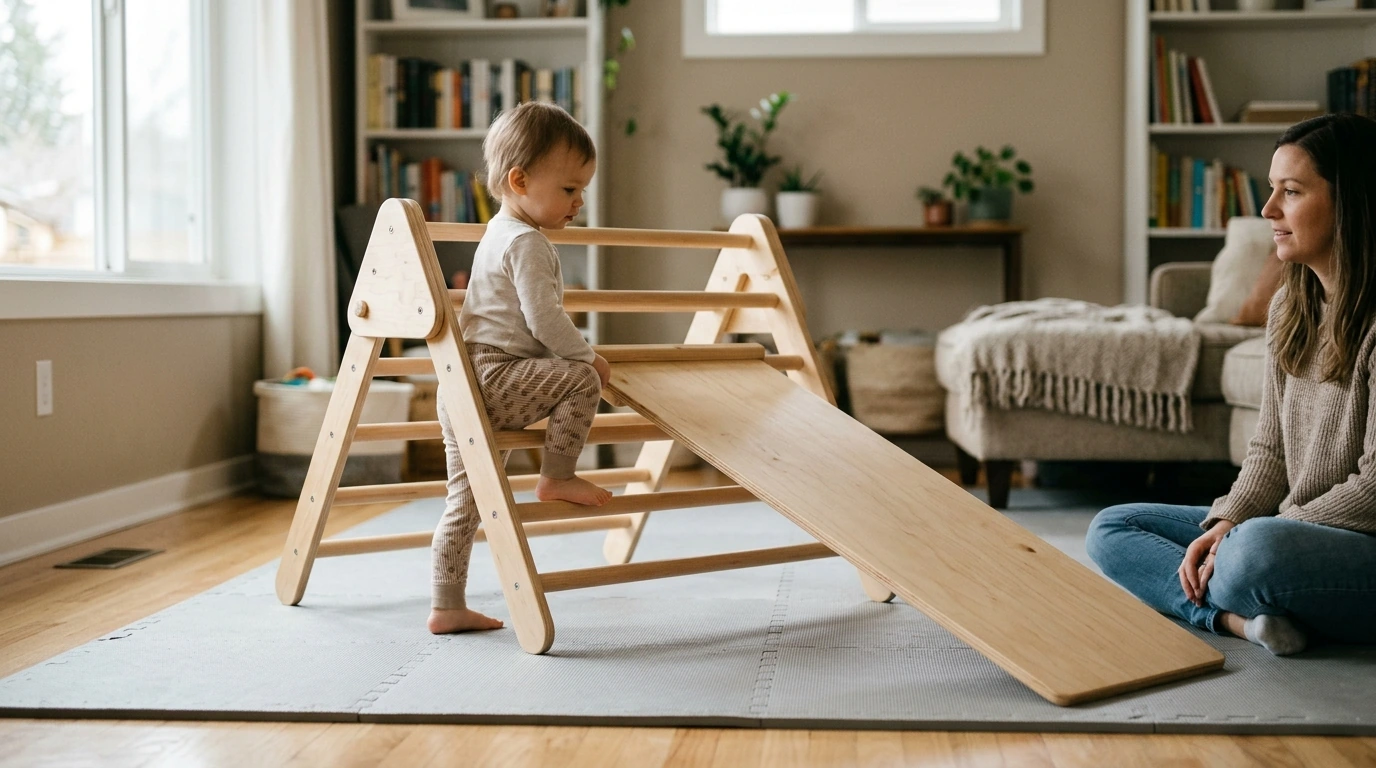
5-in-1 Wooden Pikler Triangle Climbing Set for Toddlers: A Calm, Confident Indoor Climbing Corner
Toddlers are built to climb, test limits, and repeat. A wooden Pikler-style climbing set gives that drive a dedicated “yes” place—supporting balance, coordination, and independent play without turning your couch into a daily jungle gym. Our 5-in-1 set is designed to rotate through multiple setups, so it stays interesting as your child’s skills grow and their movement needs change.
Why a Pikler-style climbing set belongs in everyday play
When you offer a consistent climbing option, you’re not adding “more stuff”—you’re creating a predictable movement routine that can lower the urge to improvise on furniture. Toddlers learn by repeating the same actions until their bodies feel steady, and a climbing corner supports that kind of self-led practice.
- Channels climbing urges into a consistent “yes space,” reducing risky improvising on furniture.
- Encourages whole-body movement: stepping, pulling up, crawling through, and controlled descending.
- Builds confidence through self-led practice—toddlers repeat the same movement until it clicks.
- Works well for short bursts of movement throughout the day, especially when outdoor play is limited.
For a helpful big-picture reminder on why play matters for development, the American Academy of Pediatrics highlights play as a key part of healthy growth and family connection: AAP: The Importance of Play in Promoting Healthy Child Development.
What “5-in-1” play can look like at home
The best indoor climbing setups aren’t complicated—they’re flexible. A few familiar configurations (rotated on a rhythm) can keep your toddler engaged without making the space feel chaotic.
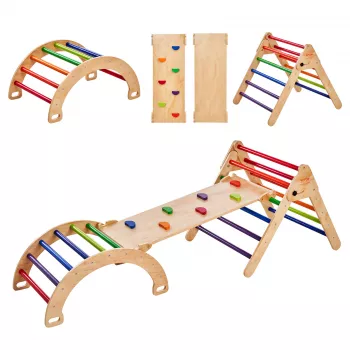
- Triangle climbing frame: a classic climb-up and climb-down structure for daily gross motor practice.
- Ramp/board as a bridge: connect to the triangle to create a gentle incline for crawling and stepping.
- Ramp flipped for variety: depending on your setup, one side can support climbing practice while the other can feel more slide-like.
- Low “mountain” challenges: keep pieces close to the floor for early walkers, then increase the challenge as balance improves.
- Open-ended play: use it as a fort base, car ramp, puppet stage, or a boundary for a reading nook when it’s not used for climbing.
Set it up for safer, calmer climbing
Safe climbing is less about “rules” and more about environment: clear space, predictable layouts, and simple movement cues your toddler can actually remember. For general toy safety guidance, the U.S. Consumer Product Safety Commission is a solid reference point: CPSC: Toy Safety.
- Place on a flat, stable surface and keep a clear safety zone around the set (no sharp corners, hard furniture edges, or heavy items nearby).
- Use a soft landing surface such as a play mat or rug; keep the area tidy so little feet don’t trip on toys.
- Introduce one configuration at a time—start low and simple, then add the ramp or new angles after the first days.
- Stay close during early sessions; as confidence grows, shift toward watchful supervision rather than directing every move.
- Teach “feet first down” early and model slow, controlled movements (especially on the ramp).
Quick setup checklist by stage
| Stage | Best setup | Goal | Parent tip |
|---|---|---|---|
| New to climbing | Triangle + low angle ramp | Comfort with stepping and gripping | Guide hands once, then let repeating do the work |
| Growing confidence | Triangle + steeper ramp/bridge | Better balance and controlled descent | Remind “slow feet” and keep the landing area clear |
| Busy movers | Rotate layouts every few days | Sustained interest and new challenges | Change one thing at a time so it stays predictable |
Choosing the right spot in a room (and keeping it usable)
Where you place the set matters as much as the set itself. A consistent “movement zone” helps toddlers understand expectations and makes it easier for you to say yes more often.
How this set supports developing skills (without forcing milestones)
If you like stage-based guidance for supportive routines, the CDC’s parenting resources are a practical companion: CDC: Child Development (Positive Parenting Tips).
Simple play ideas to keep it fresh week after week
Product spotlight: 5-in-1 Wooden Pikler Triangle Climbing Set for Toddlers
If you want one piece that can anchor an indoor movement routine, our team recommends starting with our 5-in-1 Wooden Pikler Triangle Climbing Set for Toddlers. It’s built for multi-configuration play so you can keep the experience familiar while still offering new angles and small challenges as your toddler grows more capable.
To round out your everyday “parent station” near the movement zone, you may also like a few practical picks our customers often grab alongside play-at-home staples: the LED Flashlight Smart Watch with Bluetooth Calling & 100+ Sports Modes for quick check-ins when your hands are full, and the Elegant Women’s Large Leather Tote Bag with Chain Strap for hauling water, snacks, and small toys when you do head out.
FAQ
What age is a wooden Pikler triangle climbing set best for?
Many families start during the toddler years, especially once your child is walking steadily and interested in climbing. Begin with lower, simpler configurations and increase the challenge gradually as your toddler shows consistent control, always with close supervision early on.
Where should the climbing set be placed for safer play?
Place it on a flat, stable surface with a clear safety zone around it, away from hard edges and heavy furniture. A soft mat or rug helps with slips, and keeping the area uncluttered reduces tripping during climbs and descents.
How often should the setup be changed?
Rotating configurations every few days (or weekly) works well for many toddlers, especially when interest dips or skills jump. Change one variable at a time—like the ramp angle—so it stays predictable while still feeling new.















Leave a comment