Wig Comb Set Guide: Clean Parts, Smooth Roots Fast
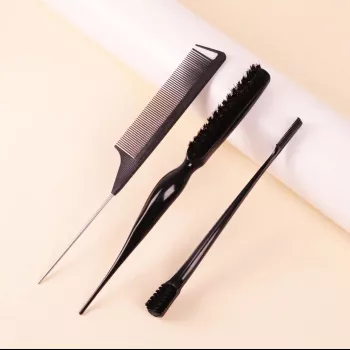
Professional Wig & Hair Styling Comb Set for Clean Parts, Smooth Roots, and Faster Finishing
Wigs and protective styles look their best when the foundation is neat: tidy parting, controlled roots, and detangling that doesn’t snag or shed. A dedicated comb set keeps each step precise—separating, smoothing, lifting, and finishing—without improvising with the wrong tool. Our Professional Wig & Hair Styling Comb Set is a simple, budget-friendly way to keep a wig station (or bathroom drawer) ready for daily wear, installs, refreshes, and quick touch-ups.
Why a dedicated comb set makes wig styling easier
When you’re styling a wig, the difference between “good” and “polished” is usually control. Using one random comb for everything often leads to uneven tension, fuzzy parts, and unnecessary pulling around knots and wefts.
- Cleaner results: Different tooth widths and comb shapes help you create straighter parts, smoother sections, and more even tension.
- Less stress on fibers: Using the right comb for detangling reduces pulling at knots, wefts, and lace areas.
- Faster routines: Reaching for a tool that matches the task (parting vs. smoothing vs. lifting) saves time.
- More consistent installs and refreshes: A repeatable tool lineup helps you keep results uniform from day to day.
How to use a professional comb set on wigs (without snagging lace)
A smooth detangle is mostly technique. The goal is to remove tangles while keeping the base stable, especially near lace-front hairlines and knot areas.
- Start at the ends: Hold the wig hair above the area being detangled and work from ends upward in short passes.
- Section first, detangle second: Clip or hold hair into manageable panels so the comb is not fighting a full cap of hair at once.
- Protect the hairline and lace: Stabilize lace-front areas with a light hand; avoid aggressive raking near knots.
- Use the right pressure: Let the comb do the work—if it’s catching, switch to a wider-tooth option or reduce section size.
- Finish with smoothing strokes: Once detangled, use a finer-tooth comb for polishing the surface and setting direction.
Matching comb types to the job (quick reference)
Wigs respond better when you match the comb to the task rather than forcing one tool to do everything.
- Wider teeth: Best for initial detangling and reducing friction on textured or curly wig hair.
- Finer teeth: Best for refining the surface, smoothing flyaways, and creating crisp styling lines.
- Parting tail/pointed end: Best for precise parting, clean sections, and guiding baby-hair or edge work.
- Teasing/lifting: Best for adding controlled volume at the roots (use gently to avoid frizzing fibers).
Common wig-styling steps and the comb to reach for
| Styling step | Best comb choice | Tip for a cleaner finish |
|---|---|---|
| Detangle after wear | Wide-tooth comb | Work in sections and start from the ends to reduce shedding |
| Define a middle or side part | Tail/parting comb | Press the part flat with light smoothing strokes after sectioning |
| Smooth roots near the cap | Fine-tooth comb | Use short, controlled passes to avoid pulling at knots/wefts |
| Add subtle crown lift | Teasing/lifting comb | Tease minimally, then smooth the top layer so volume looks natural |
| Refresh braids/ponytails | Fine-tooth or medium-tooth comb | Comb the surface only; avoid over-combing tight styles |
Synthetic vs. human hair wigs: small adjustments that matter
The same tools work for both, but your touch should change depending on the fiber. If you’re not sure which you have, start gently and “earn” more pressure only if the hair is cooperating.
- Synthetic fibers: Detangle gently and avoid aggressive teasing; use wider teeth more often and keep tension light.
- Human hair wigs: Can handle more detailed refining, but still benefit from sectioning to prevent breakage and knot stress.
- Curly or coily textures: Detangle with wider teeth and smaller sections; finger-detangling before the comb can help.
- Straight styles: Finish with finer teeth for a sleek surface and sharper part lines.
A simple 5-minute refresh routine for everyday wear
If you wear wigs often, small daily habits prevent bigger detangling sessions later. This quick routine is built around minimizing tension at the base while restoring your part and top layer.
Care tips: keep combs clean and wig-ready
When this set is especially handy
Quick add-ons from our store (travel, touch-ups, and on-the-go)
- Professional Wig & Hair Styling Comb Set (the core tools for parts, smoothing, and detangling)
- Elegant Women’s Large Leather Tote Bag with Chain Strap (roomy enough to stash hair tools and a wig bag)
- Wireless Earbuds TWS Bluetooth 5.3 – Low Latency, HiFi Sound, Waterproof (nice for install days and long styling sessions)
Helpful, reputable guidance for hair and wig care
- American Academy of Dermatology Association – Hair care tips
- American Cancer Society – Wigs and hairpieces (wearing and care guidance)
FAQ
Can a comb set help reduce shedding on a wig?
Yes—choosing the right comb and using sectioning plus gentle, ends-to-roots detangling reduces mechanical pulling that can loosen hairs from knots or stress wefts. Some shedding is normal over time, but better technique typically means less of it.
What’s the safest way to detangle a lace-front wig near the hairline?
Support the lace with your fingers, work in very small sections, and start at the ends using wider teeth first. If you feel snagging, stop and switch to a wider-tooth option or reduce the section size rather than pulling through.
How often should styling combs be cleaned when used on wigs?
Remove trapped hair after every use, and wash combs whenever you see product buildup—weekly is a practical routine for frequent wig wearers. Always let them air-dry fully before storing so residue and moisture don’t transfer back onto the fibers.













Leave a comment