Build a Wall Cat Nest & Climbing Route with Scratcher
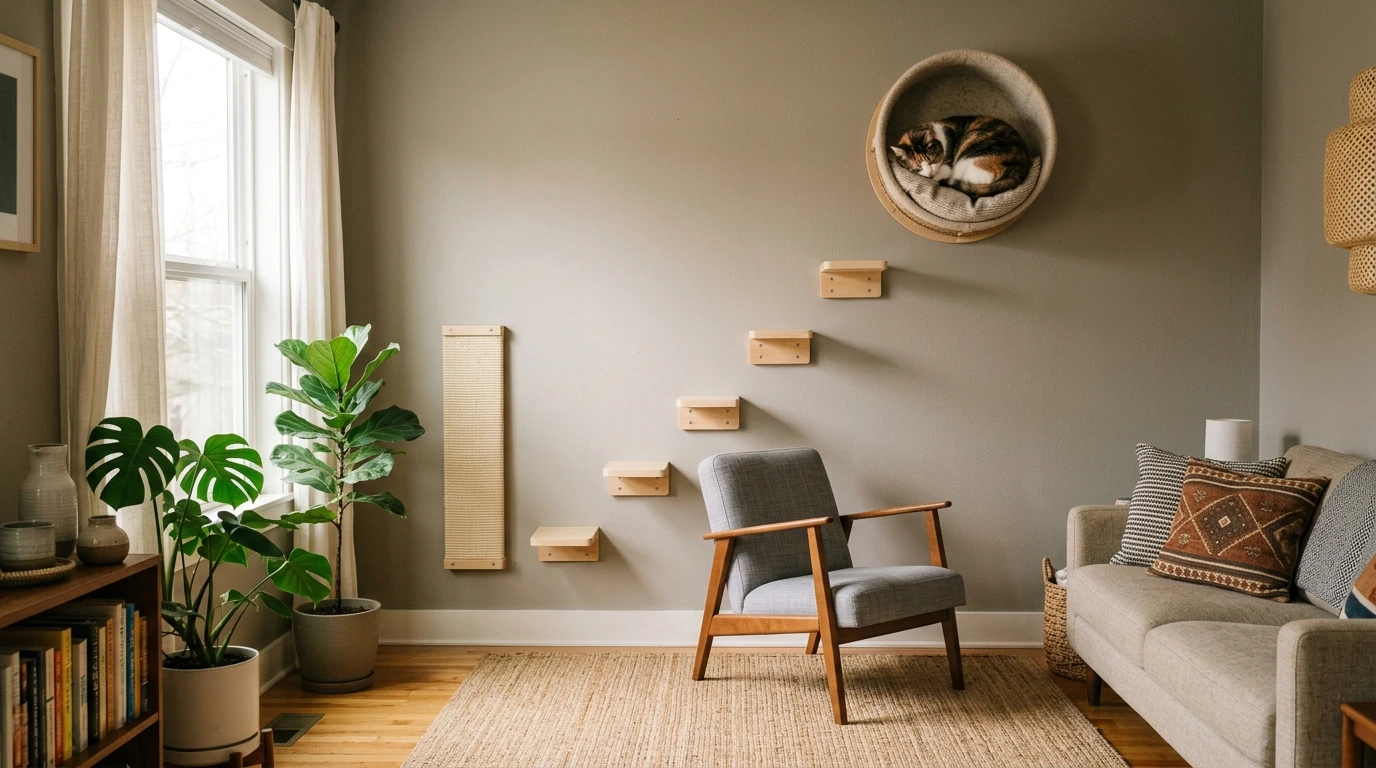
DIY Wall-Mounted Cat Nest and Climbing Frame with Scratcher: a vertical hangout that saves floors (and sofas)
Give cats what they naturally crave—height, safe lounging spots, and a satisfying place to scratch—without giving up precious floor space. Our DIY Wall-Mounted Cat Nest and Climbing Frame with Scratcher is designed for building a clean, climbable “cat route” on the wall: a cozy nest for naps, sturdy steps for confidence, and an integrated scratch zone to redirect claws away from furniture.
When you plan it like a path (not a random set of shelves), most cats treat it like their personal hallway in the sky—and you keep your room more open, easier to clean, and calmer for everyone living in it.
What this wall-mounted cat setup does for daily cat life
- Creates a vertical territory: cats often feel calmer when they can observe from above, especially in multi-pet homes.
- Combines three needs in one footprint: climbing, resting, and scratching—so the cat’s favorite behaviors have a designated place.
- Helps reduce furniture scratching: by offering a more appealing, consistent scratch surface in a high-traffic cat area.
- Adds enrichment indoors: a defined route encourages movement, jumping, and short bursts of play throughout the day.
- Keeps the room tidy: wall mounting keeps the floor open for vacuuming and reduces bulky cat trees in walkways.
If you want more background on why vertical space and predictable “safe zones” matter, iCatCare has excellent guidance on feline enrichment and home setup: https://icatcare.org/advice/.
Planning the placement: choose the “cat route” before picking up tools
- Start with your cat’s natural traffic pattern: place the first step near an existing launch point (a sturdy chair, low shelf, or window ledge) rather than forcing a brand-new approach.
- Aim for a calm destination: the nest works best where your cat already likes to nap (near a window, away from loud doors, not directly above feeding bowls or litter).
- Create a logical climb sequence: set each step so your cat can move up and across without awkward leaps; smaller, frequent moves build confidence for cautious cats.
- Respect household flow: avoid mounting where people constantly brush past the wall—cats may abandon a perch if it feels exposed.
- Keep safety zones clear: don’t mount above fragile decor, hot radiators, or areas where a slip would cause injury.
Our team’s rule of thumb: if you wouldn’t feel comfortable stepping there in socks, your cat probably won’t feel secure landing there at speed.
Mounting basics that matter: safer walls, steadier cats
For practical scratching guidance (what cats prefer, and how to redirect), the ASPCA’s scratching resources are a helpful reference: https://www.aspca.org/pet-care/cat-care.
A simple layout guide: match the setup to your cat’s confidence
| Home situation | Best starting point | Step spacing style | Where to put the nest | Where to put the scratcher |
|---|---|---|---|---|
| Apartment / limited space | Near a stable chair or low shelf | Compact, frequent steps | Near a window corner | On the approach or exit path |
| One cat, high energy | Near a climbing-friendly shelf | Moderate gaps + a sideways move | Higher vantage point | Where your cat pauses before jumping |
| Multi-cat household | Two access points if possible | Add an alternate step to pass | Separate from feeding area | Between routes to reduce guarding |
| Senior / mobility needs | Very low first step | Short gaps, gentle rise | Mid-height, easy access | At comfortable standing height |
Helping cats actually use it (without turning it into a “project”)
If your cat is older, dealing with weight changes, or suddenly stops jumping, it’s worth reviewing general wellness guidance with a trusted source like the AVMA cat care hub: https://www.avma.org/resources/pet-owners/petcare/cats.
Care and upkeep: keep it inviting and long-lasting
Helpful add-ons from our store (optional, but convenient)
- DIY Wall-Mounted Cat Nest and Climbing Frame with Scratcher: our all-in-one wall route base—nest, climbing steps, and scratch zone in one concept.
- LED Flashlight Smart Watch with Bluetooth Calling & 100+ Sports Modes: handy to keep a quick light on you while checking alignment, corners, and stud marks in dim rooms.
- Wireless Earbuds TWS Bluetooth 5.3 – Low Latency, HiFi Sound, Waterproof: useful if you want hands-free calls or a podcast while you measure, level, and install.
FAQ
Is a wall-mounted cat nest and climbing frame safe for larger cats?
Yes, when you install it correctly: anchor into studs or use load-rated anchors, keep jump gaps reasonable, and test each mounted component for stability before your cat uses it. For heavier or less agile cats, keep the route lower overall and use shorter spacing between steps.
Where should the scratcher be placed on a wall-mounted route?
Put it where scratching naturally “fits” in your cat’s routine: near the approach step, at a common pause point, or along the descent path after a nap. If you’re protecting a specific sofa corner, place the scratcher closer to that conflict area so it becomes the default choice.
How do you get a cat to use a new wall-mounted climbing setup?
Start low and easy, then reward curiosity with treats, praise, or play when your cat explores it voluntarily. Use scent cues on the first steps and nest, and avoid lifting your cat onto it—let your cat choose the pace.















Leave a comment