Best Cat Tree Tower: Sisal Posts, Hammock & Condos
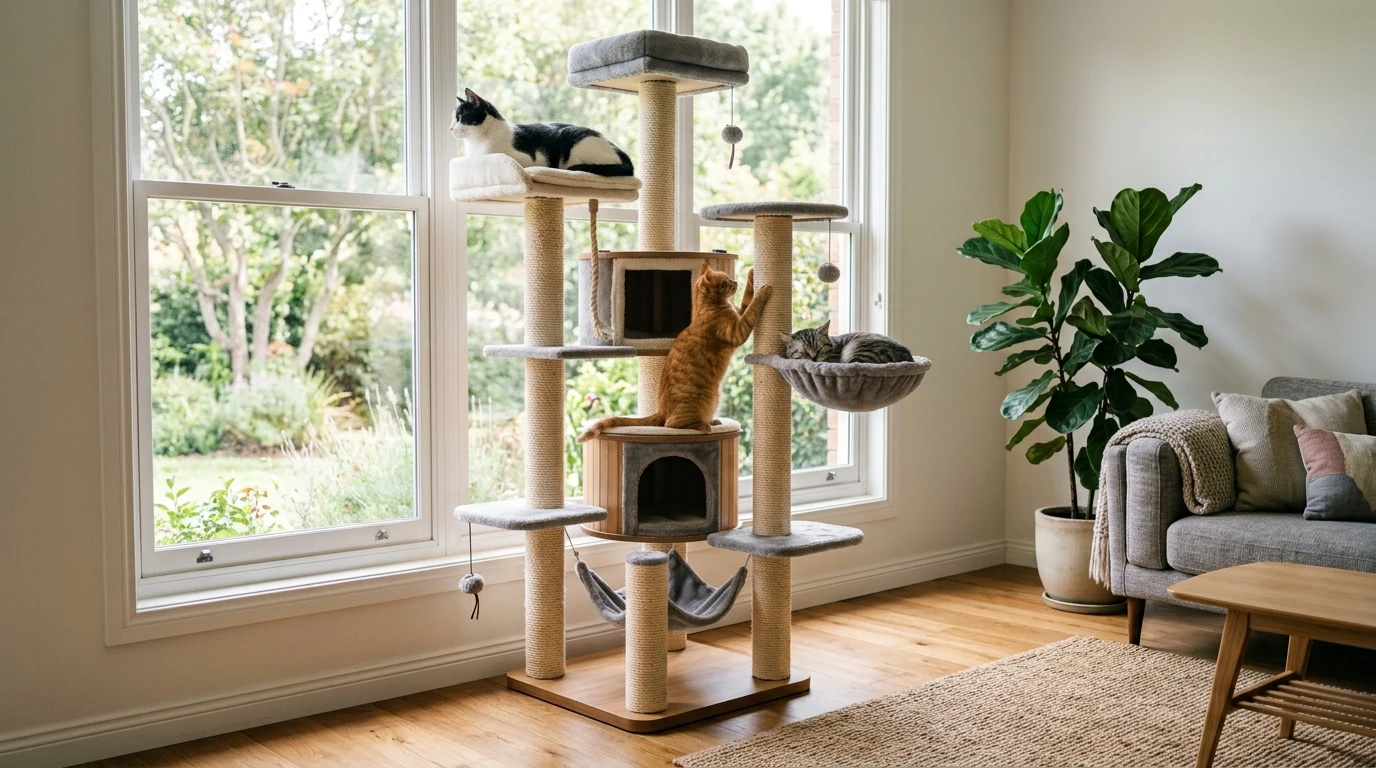
A multi-level cat tree can turn vertical space into a daily routine of climbing, scratching, lounging, and hiding. This style combines sisal-wrapped posts for healthy scratching, padded perches for resting spots at different heights, a hammock for deep naps, and condos that give cats a secure retreat—helping reduce boredom and keeping furniture safer from claws.
What This Tower Adds to a Cat’s Daily Routine
Cats thrive when their home setup supports the way they naturally move, rest, and “own” territory. A tall, multi-level tower helps turn ordinary moments into predictable, satisfying habits.
- Vertical movement supports natural behaviors like climbing, jumping, and surveying the room from a safe height.
- Multiple rest areas help multi-cat homes reduce crowding by offering choices at different levels.
- Dedicated scratching surfaces encourage appropriate scratching and can redirect attention away from sofas and rugs.
- Covered condos provide an enclosed, low-traffic space for cats that prefer privacy or need cooldown time after play.
- A hammock-style cradle can be a favorite for cats that like a snug, gently supported nap spot.
Guidance from feline welfare organizations often emphasizes environmental enrichment—especially vertical space, resting zones, and appropriate scratching outlets. For more detail, see the American Association of Feline Practitioners (AAFP) Environmental Needs Guidelines.
Key Features to Look For (and Why They Matter)
Not all cat trees feel the same to a cat. Texture, stability, and variety influence whether the tower becomes a daily favorite or a rarely used piece of furniture.
- Sisal scratching posts: tougher texture and better grip than many fabrics, helping cats shed outer claw layers while stretching shoulders and back.
- Padded perches: softer landing zones and comfy lounging surfaces that can make higher levels more inviting.
- Condos: enclosed spaces that can reduce stress for timid cats and provide separation when multiple cats share a room.
- Hammock: adds a different resting posture than flat platforms—often used for longer naps.
- Stable base and sturdy connections: reduces wobble that can discourage jumping onto upper levels.
Scratching is more than sharpening claws—it’s communication, stretching, and stress relief. A deeper explanation of the behavior (and how to support it) is available from International Cat Care.
Size, Placement, and Setup Tips for Real Homes
A great cat tower doesn’t just depend on the design—it depends on where it lives. Small placement tweaks can make the difference between “ignored” and “constantly used.”
- Choose a location with a clear “jump path” so cats can approach and leave without slipping or colliding with furniture.
- Place near a window when possible to add natural enrichment from bird-watching and sunlight.
- Keep away from fragile shelves or tight walkways if cats tend to launch off the top perch at speed.
- For kittens or seniors, position the tower near a sofa or sturdy chair to create an intermediate step.
- After assembly, re-tighten hardware after the first few days of use, then periodically, to maintain stability.
If the goal is to reduce furniture scratching, consider placing the tower close to the current “problem spot” first. Once the posts become a habit, the tree can be nudged toward a preferred long-term location.
Quick Comparison of Spaces and Their Best Uses
Different platforms serve different moods: play, nap, hide, or scratch. A mix of open perches and enclosed condos helps households with cats that have opposite social preferences.
| Component | Best for | Placement tip |
|---|---|---|
| Sisal scratching posts | Stretching, claw care, marking territory | Put the tree where the cat already likes to scratch (often near room entrances) |
| Padded perches | Lounging, observing, sunbathing | Near a window or in the main living area for a “social” resting spot |
| Hammock | Long naps, cozy resting posture | Lower-to-mid level is often easiest for quick access |
| Condos | Privacy, stress relief, quiet time | Place the tower in a calm corner if the condo is the main retreat |
| Top platform | High vantage point, confidence building | Avoid placing directly under shelves that might get bumped during leaps |
Care and Maintenance for Long-Lasting Use
Who This Style Suits Best
Featured Option: Large Cat Tree Tower
Large Cat Tree Tower with Sisal Scratching Posts, Hammock, Padded Perches, and Condos
is built around variety: scratching texture where cats want it, multiple padded perches for lounging, a hammock-style cradle for deeper rest, and enclosed condos for quiet downtime.
More In-Stock Picks to Round Out Your Home Setup
- LED Flashlight Smart Watch with Bluetooth Calling & 100+ Sports Modes for hands-free timers and quick calls during feeding, play sessions, or evening walks.
- Elegant Women’s Large Leather Tote Bag with Chain Strap to carry treats, travel wipes, and small pet essentials when you’re on the go.
- Wireless Earbuds TWS Bluetooth 5.3 – Low Latency, HiFi Sound, Waterproof for calls or audio while you supervise playtime and keep an ear on the room.
FAQ
How tall should a cat tree be for an adult cat?
A height that gives an adult cat a true vantage point is ideal, as long as the base is stable and the connections stay tight. Many adult cats enjoy taller towers when they’re placed on a flat surface and don’t wobble during jumps.
How can a cat be encouraged to use the scratching posts instead of furniture?
Place the tree near the current scratching spot, make the posts appealing with catnip or a pheromone spray, and reward your cat when they use it. During the transition, temporarily block or cover the furniture area to help the new habit stick.
Is a hammock safe for larger cats?
It can be safe if the hammock is rated for your cat’s weight and the hardware is assembled tightly. Check regularly for sagging fabric or loosening fasteners, and consider keeping the hammock at a lower level if your cat tends to leap into it with force.
















Leave a comment