1000W Rotating Hot Air Brush: Smooth Blowouts Fast
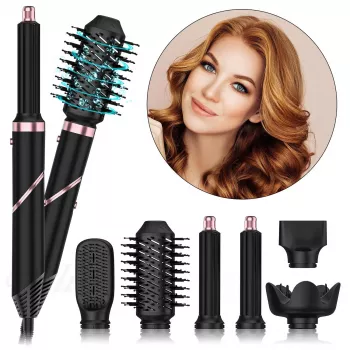
1000W Air Wrap Rotating Hot Air Brush & Hair Dryer with Ion Technology: Smooth Blowouts, Faster Styling
A rotating hot air brush that doubles as a hair dryer can simplify the daily routine by drying, smoothing, and shaping in one pass. With a 1000W motor and ion technology, this type of air-wrap style tool is built for faster blowouts, softer ends, and a shinier finish—without juggling a round brush in one hand and a dryer in the other. Below is what to expect from a rotating hot air brush, who it suits best, and how to use it for a polished, salon-like result with less effort.
What This Rotating Hot Air Brush Does
A rotating hot air brush is designed to style while it dries. Instead of fully drying first and styling second, you remove most moisture with airflow and heat while the barrel shapes the hair into a smooth curve.
- Dry-and-style in one tool: Hair is guided and shaped while moisture is removed, helping cut down on total styling time.
- Rotation builds a “blowout” bend: The barrel wraps and releases hair to create lift at the roots and a neat, rounded finish through the ends.
- Ion technology supports frizz control: Ionic function is designed to reduce static so hair looks smoother and glossier, especially in drier air or when hair tends to fly away.
- Best for soft shapes: Great for smoothness, bouncy ends, and loose movement rather than tight curl definition.
Key Features to Look For in Daily Use
Not all rotating hot air brushes feel the same in the hand, even if the wattage is similar. A few practical details make the biggest difference when you’re styling on a busy morning.
- 1000W power: Often strong enough to dry damp hair efficiently, then refine sections for a smooth finish.
- Left/right rotation controls: Styling both sides of the head is easier when you can switch rotation direction instead of twisting your wrist awkwardly.
- Multiple heat and airflow settings: Fine hair generally does better with lower heat; thicker hair often benefits from higher airflow for faster evaporation.
- Comfort and handling: A secure grip and reasonable weight help reduce arm fatigue, especially for longer hair.
- Detangling-friendly bristles: Even bristle spacing and gentle tips help guide hair cleanly during rotation and reduce snagging.
Quick Specs Checklist for a Rotating Hot Air Brush
| Spec | Why it matters | What to aim for |
|---|---|---|
| Wattage | Affects drying speed and styling performance | Around 1000W for most hair types |
| Heat settings | Helps prevent overheating fine or damaged hair | At least 2 heat levels |
| Airflow settings | Controls drying intensity and finish | At least 2 airflow levels |
| Rotation direction | Easier styling on both sides of the head | Left/right rotation options |
| Ion function | Supports a smoother finish by reducing static | Built-in ionic technology |
| Barrel/bristle design | Influences volume, smoothness, and snag resistance | Even bristle distribution; gentle tips |
Who It’s Best For (and When to Use Something Else)
This tool category shines when the goal is a clean, everyday blowout look with less fuss—especially for hair that can look frizzy or puffy after air drying.
- Great for: Medium to long hair that you want smooth with volume at the roots and curled-under ends.
- Helpful for: Hair that gets staticky, flyaway-prone, or frizzes in humidity (results also depend on products and technique).
- May take practice for: Very thick hair or tightly coiled textures—often easiest with smaller sections and a quick pre-dry.
- Consider an alternative if: Hair is extremely short (not enough length to wrap) or you’re aiming for tight curls and defined ringlets.
For general hair care habits that help minimize breakage during styling, the American Academy of Dermatology Association offers practical guidance on daily routines and gentle handling: Hair care basics (AAD).
How to Get a Smooth Blowout Finish
A rotating hot air brush performs best on damp, not dripping-wet, hair. Less water in the hair means less total heat exposure and a quicker, more controlled finish.
If you use styling products, it can be useful to understand labeling and intended use categories. The FDA provides an overview of hair products and cosmetic basics: Cosmetics and hair products (FDA).
Tips for Volume, Ends, and Face-Framing Pieces
Care, Cleaning, and Longevity
Product Options Available Now
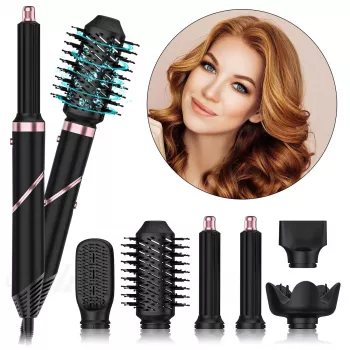
- 1000W Air Wrap Rotating Hot Air Brush & Hair Dryer with Ion Technology — designed for dry-and-style convenience with rotation support for volume and a polished finish.
- Elegant Women’s Large Leather Tote Bag with Chain Strap — a roomy option for carrying hair tools and essentials when traveling or heading to the gym.
- Wireless Earbuds TWS Bluetooth 5.3 – Low Latency, HiFi Sound, Waterproof — a simple add-on for hands-free calls or playlists while getting ready.
FAQ
Can a rotating hot air brush be used on wet hair?
It’s best used on towel-dried, damp hair. Starting on soaking-wet hair usually increases styling time and heat exposure, so pre-dry the roots first and then style in sections.
Does ion technology reduce frizz for all hair types?
Ion technology can help reduce static and flyaways, which often makes hair look smoother and shinier. Results vary based on humidity, hair porosity, and the products you use, so pairing it with a heat protectant and a light smoothing cream often works best.
How do you prevent tangling when the barrel rotates?
Detangle before you start, use smaller sections, and keep tension light so hair can wrap and release smoothly. Avoid over-rotating, and stop rotation right away if you feel snagging—then reset with a smaller section.













Leave a comment