Scale RC Excavator: Practice 22-Channel Controls
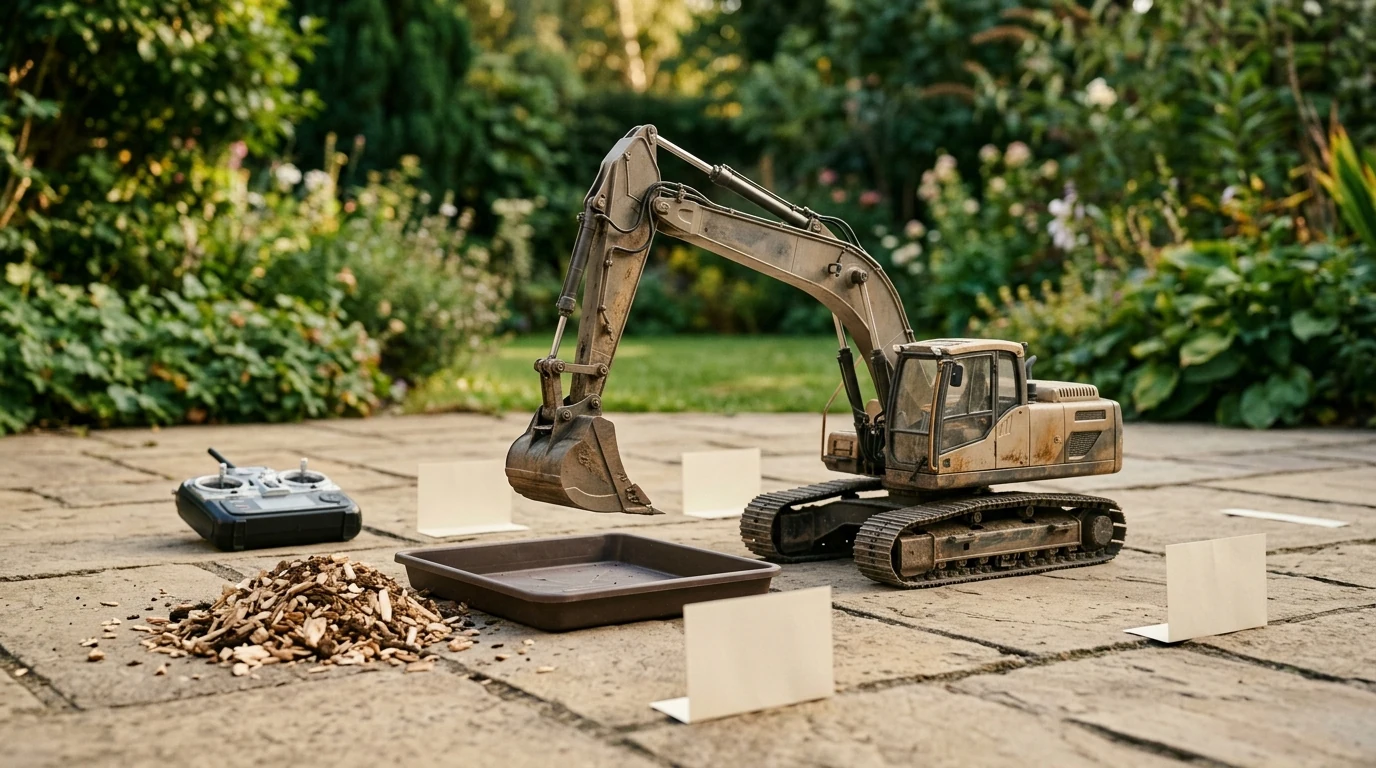
A scale RC excavator gets more interesting when you give it a job to do. With our 1:14 Scale RC Excavator with 22 Channels and 680° Rotation, you can set up a small work area, learn the controls, and build a new challenge around each session. Start with a simple route and a few lightweight materials; there’s no need to create an elaborate construction site on day one.
The key specifications at a glance
The 1:14 scale describes the model’s proportions relative to a full-size excavator. It does not tell you its exact length or the amount of turning room you’ll need, so compare the product dimensions with your intended play space if room is tight. The listed 22 channels describe the control system; they should not be read as a promise of 22 separate excavator movements. Likewise, 680° is the listed rotation range, not a claim that the model rotates continuously.
| Specification | What it means for your setup |
|---|---|
| 1:14 scale | Leave room to drive, position, and maneuver the model. |
| 22 channels | Allow time to learn the controller’s available commands. |
| 680° rotation | Design a task that uses the listed rotation range. |
| RC operation | Choose an open area where you can keep the model in view. |
These specifications make the excavator worth considering if you want to practice more than straightforward driving. For the current price, availability, dimensions, and included components, use the product page before you buy.
Make the rotation part of the challenge
Give your first course three clear points: a starting position, a work zone, and a marked destination. You might use pieces of paper to mark the boundaries and lightweight objects as pretend construction materials. Keep everything easy to move so you can adjust the course as you discover how much space your turns require.
Begin by driving into position and stopping. Try the available arm and bucket controls, rotate toward the destination, then return to your starting position. The goal is a controlled sequence, not a fast run. A short round focused only on positioning can teach you more than a crowded course where several actions happen at once.
Once the basic sequence feels familiar, change one element at a time. Move the destination farther away, approach the work zone from a different direction, or mark a narrower stopping area. You can also practice ending with the excavator facing the way you want to drive next. These small changes turn the listed rotation range into something you actively use while letting you notice which controller inputs need more practice.
Keep the task within the model’s instructions. A pretend transfer challenge does not require heavy loads, and the listed specifications do not establish a particular lifting capacity. Smooth inputs and accurate placement are useful goals whether you’re running a quick indoor course or planning a larger setup later.
Choose a space that suits the model
For your first session, choose a clear, level area with enough room to drive and turn while keeping the excavator in sight. Move fragile objects out of the route and keep people and pets clear of the operating area. A simple layout also makes it easier to tell whether an unexpected movement came from a control input or an obstacle.
If you want a pretend worksite, start with lightweight, manageable materials rather than assuming the excavator is suited to digging through any surface. Read the product instructions before using it outdoors or around loose material; the listed specifications do not establish water resistance or performance on a particular terrain. After you learn how the model responds on a suitable surface, you can decide whether a more involved course fits both the instructions and the space you have.
Follow the manufacturer’s charging and battery directions, and provide age-appropriate supervision. The U.S. Consumer Product Safety Commission’s toy safety guidance is a helpful general resource when choosing and using toys. Before a session, give yourself a clear place to set the controller and personal items; if you’re organizing an outdoor outing, our Elegant Women’s Large Leather Tote Bag with Chain Strap is an option for carrying everyday belongings separately from the operating area.
Is this the right RC excavator for your plans?
Our excavator is a fit to consider when you want a scale model with a substantial listed channel count and rotation range, rather than a basic drive-only RC vehicle. The best reason to choose it is that you’ll enjoy learning its controls and setting up tasks that call for careful positioning.
Before purchasing, ask yourself four practical questions: Do you have enough open space for the model’s dimensions? Do you want to spend time learning multiple commands? Is your available surface suitable under the product instructions? And will you enjoy setting up a course and practicing it over several sessions? If the answers are yes, view our 1:14 Scale RC Excavator with 22 Channels and 680° Rotation for current purchasing details.
FAQ
What does 1:14 scale mean for an RC excavator?
It describes the model’s scale relative to a full-size excavator, not its exact dimensions. Check the product measurements when the size of your play space matters.
Does 22 channels mean 22 separate excavator movements?
No one-to-one relationship is established by the listed channel count. Use the product instructions to identify the controller’s specific commands.
Where should I first use an RC excavator?
Start in a clear, level area where you can keep the model in sight. Follow the product instructions for suitable surfaces and operating conditions.














Leave a comment