10000mAh Solar Hand Crank Emergency Radio for Outages
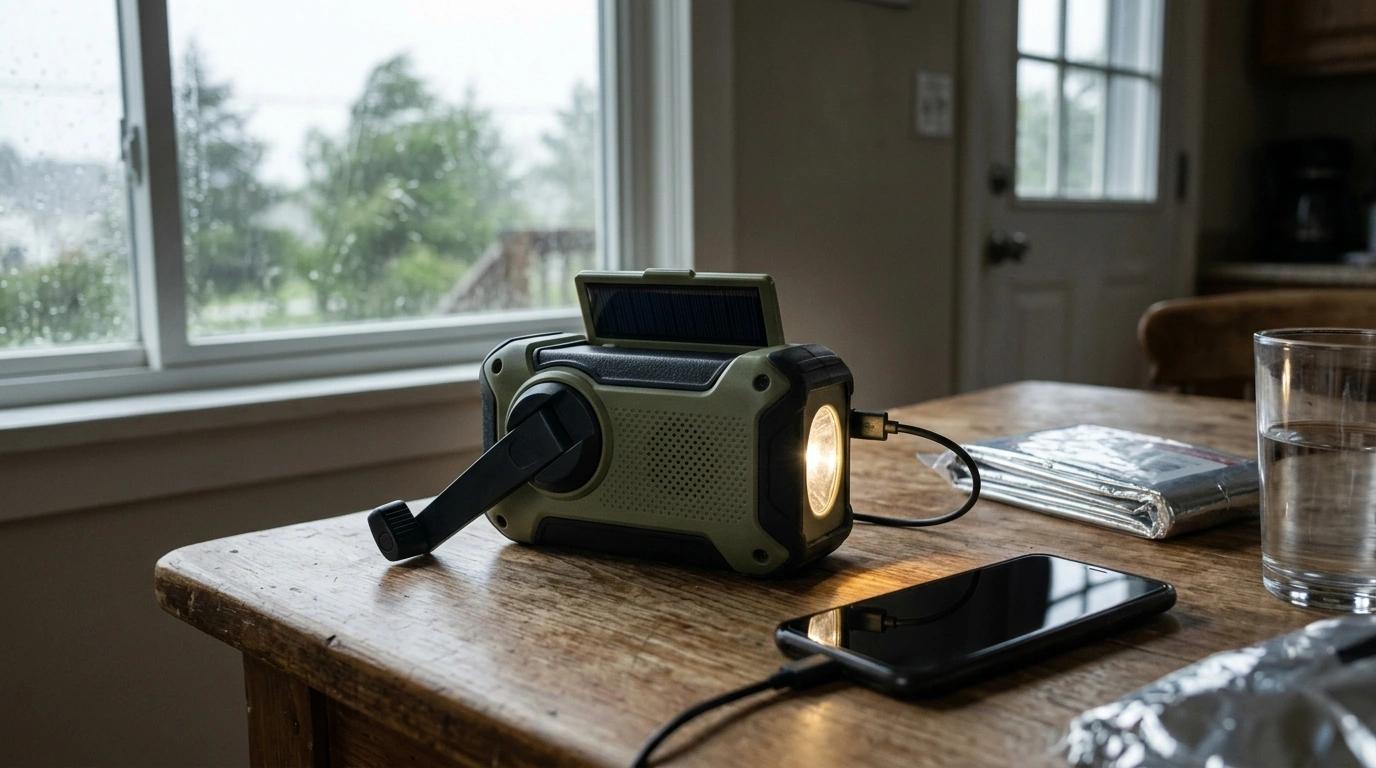
10000mAh Solar Hand Crank Emergency Radio with Flashlight & Power Bank: alerts, light, and phone power in one grab-and-go device
When the power goes out, the most useful gear is the gear that covers multiple needs at once: getting emergency information, creating safe light, and keeping a phone alive for check-ins. Our 10000mAh Solar Hand Crank Emergency Radio with Flashlight & Power Bank is built for those moments—home outages, storm season, road trips, and camping—where backup power and reliable updates matter.
Instead of juggling separate batteries, a flashlight, a radio, and a power bank, you can keep one device within reach and follow a simple routine when conditions change fast.
What this emergency radio is designed to do
- Keep information moving: a dedicated emergency radio format for monitoring important broadcasts when the grid and internet are unreliable.
- Keep light available: an integrated flashlight helps handle blackouts, stairwells, car trouble, and quick tasks after dark.
- Keep a phone powered: a built-in 10000mAh power bank can top up a phone or small USB device when wall charging isn’t available.
- Keep options open: multiple charging approaches (solar + hand crank + standard charging) are meant to reduce single-point failure during outages.
For broader readiness planning, it also helps to align your setup with guidance from Ready.gov and understand how alerts may reach you through systems outlined by the FCC (EAS & WEA).
How to use it during an outage (simple, repeatable routine)
In an emergency, your goal is to make the battery last while still getting the essentials: updates, safe movement, and communication.
- Before weather arrives: charge the power bank fully, test radio reception briefly, and confirm the flashlight works.
- During the outage: use the radio for update windows (for example, every hour) instead of leaving it on continuously to manage battery use.
- Use light strategically: rely on the flashlight when moving around; switch it off between tasks to preserve power.
- Top up essentials first: prioritize a phone used for emergency calls/texts, then other small USB devices as needed.
- After power returns: recharge the device and store it in an easy-to-grab location (entry closet, pantry, or go-bag).
If you rely on broadcast weather updates in your area, you can learn how local coverage works via NOAA Weather Radio.
Charging options, explained (solar, hand crank, and standard charging)
What makes this type of emergency radio especially practical is resilience: you’re not tied to a single way of getting power.
- Solar charging: best for slow, steady replenishment when placed in direct sunlight; ideal as a background charge during extended outages.
- Hand crank charging: best for immediate, human-powered energy when sunlight isn’t available; useful for short bursts to regain enough power for radio checks or a quick phone boost.
- Standard charging (when available): the fastest way to start storm season ready; use it before the emergency begins.
- Best practice: treat solar and hand crank as resilience tools—extra ways to stay operational when conventional charging is not an option.
When to use each power method
| Power method | Best for | When it matters most | Quick tip |
|---|---|---|---|
| Standard charging | Getting fully prepared ahead of time | Before storms, travel, or camping | Charge to 100% and store it where it’s easy to grab |
| Solar charging | Maintaining power over long outages | Daytime outages, multi-day events | Place in direct sun and reposition occasionally |
| Hand crank | Immediate backup when other power is unavailable | Nighttime outages, heavy cloud cover, indoor sheltering | Use in short sessions and check power needs between sessions |
Where it fits best: home emergency kits, cars, and outdoor plans
- Home emergency shelf: one device can cover radio updates, lighting, and phone charging without hunting for separate batteries and chargers.
- Car emergency bag: helpful for roadside situations where a phone battery and a light are the difference between waiting comfortably and struggling.
- Camping and cabins: supports off-grid weekends where light and device charging are still needed, plus radio access when cell coverage is limited.
- Apartment living: compact preparedness for elevators, stairwells, and building-wide power interruptions.
If you like having a second, always-on-person layer of light (especially on walks, in parking lots, or during evening outages), our team often pairs a primary emergency radio with a wearable backup like the LED Flashlight Smart Watch with Bluetooth Calling & 100+ Sports Modes.
What to check before choosing an emergency radio + power bank
One small upgrade that makes preparedness easier: keep a short charging cable dedicated to your kit, so you’re not borrowing from daily chargers that wander around the house. If you’re also building a comfort kit for longer waits (sheltering at home or sitting in a car), our Wireless Earbuds TWS Bluetooth 5.3 can be a useful add-on—just treat them as a “nice-to-have” after communication and lighting are covered.
A straightforward readiness checklist to keep with it
FAQ
Can the hand crank charge a phone?
Yes, but hand-crank power is best used for small, immediate boosts and to keep the device operational for radio checks and light. For best results, prioritize essential communication and crank in short sessions for incremental gains.
Does solar charging work indoors or on cloudy days?
Solar charging works best in direct sunlight. It can still collect some energy in weaker light, but at a reduced rate, so it’s most reliable as long-duration support rather than a quick refill.
What should be charged first during an outage: the radio or the phone?
Charge whichever is most urgent: your phone for emergency calls/texts, or the radio for official updates. After that, rotate short usage windows for each to preserve the overall battery.















Leave a comment